Showing posts with label credit card interest rate. Show all posts

Credit Card Vs. Debit Card - What Are The Main Differences?

Thursday, July 30, 2009

credit card
What is a Debit Card?The card you use at the ATM is known as a debit card. When debit cards first appeared it was easy to tell them apart from credit cards. Debit cards didn’t have a credit card company logo on them; instead, they usually just had your bank name, your account number and your name.
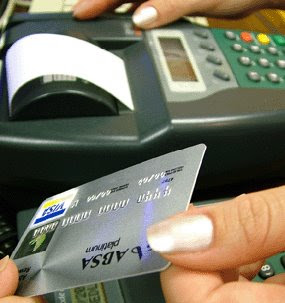
Today debit cards look exactly like credit cards even carrying the same logos. Both types of cards can be swiped at the checkout counter , used to make purchases on the internet, or to pay for the fill-up at the gas pump. When you use your debit card to make a purchase, it’s just like using cash. The account that is attached to your debit card, in most cases your checking account, is automatically debited when you use your debit card. The cost of your purchase is deducted from the funds you have in that account. In the case of a credit card, you can pay just 5% of your bill amount and carry forward the balance to be paid the next time. You do not have to settle all in one go. This is referred to as revolving credit.
What is a Credit Card?On the other hand, when you use your credit card to make a purchase you are using someone’s else’s money, specifically the issuer of the credit card, usually a banking institution.
In effect, you agree to pay them back the money you borrowed to make your purchase. In addition you will also pay interest on the money “loaned” to you at the rate which you agreed to when you applied for their credit card. This is known as the annual percentage rate (APR). While the two cards might act and look alike, the levels of consumer protection that each type of card provides can be different.
Credit Cards offer Better Protection!Under federal law, if someone steals your credit card you're only responsible to pay the first $50 of unauthorized charges. However, if you notify the credit card issuer before a thief is able to make any charges you may be free from all liability. If the credit card is not physically present when an unauthorized or fraudulent purchase is made, such as over the internet, you’re also free from liability for those charges.
MasterCard and Visa offer zero-liability protection where you won’t pay any charges if someone uses your credit card to make an unauthorized purchase.The protection offered to debit card fraud is similar but with a few exceptions. For example, your liability under federal law is limited to $50, the same as for a credit card, but only if you notify the issuer within two business days of discovering the card's loss or theft. Your liability for debit card fraud can jump up to $500 if you don’t report the loss or theft within two business days. And if you are the type of person that gives a passing glance to your monthly bank statement, you could be totally liable for any fraudulent debit card charges if you wait 60 days or more from the time your statement is mailed. Visa and MasterCard zero-liability protection applies to your debit card but only for transactions that do not involve the use of your PIN (personal identification number).
Additional protection against fraudulent use of your credit or debit cards may be available through your homeowner’s or renter’s insurance. Check your policy or with your agent for more information about your coverage.
Also be aware that you should contact your card issuer by certified letter, return receipt requested, after you’ve contacted them by phone to protect your consumer rights.
As for which card to use for what type of purchase, most experts agree that you should use your debit card for the same type of purchases you’d make as if you were using cash. Therefore, it makes more sense to use your debit card than your credit card at the grocery store or gas station (provided you have sufficient funds to cover these purchases of course).
Credit Card Purchase DisputesYou should avoid using your debit card for any online purchase or for something which is expensive. Why? The main reason is that it is much easier to dispute a charge when you use your credit card. Your credit card company will remove the charge until the problem is resolved.
With your debit card you are stuck dealing with the merchant directly to resolve any problems with a purchase. The merchant establishment will have a debit terminal. When you give your card to make the payment, the card will be swiped. The moment it is done, an electronic message is sent to the bank which checks to see if the customer has that much money in his/her account. A credit card requires the bank to make a payment to the merchant establishment (online shop, hotel or wherever you spend money using your card). The cardholder has to settle the bill later.
Read More..

Credit Card Comparisons Guide

Saturday, July 25, 2009

credit card
Shopping around for a credit card can save you money on interest and fees. You’ll want to find one with features that match your needs. This information can help you
  • Understand the features of credit cards
  • Compare credit card features and costs
  • Know your rights when using your credit card
  • File a complaint if you have a problem with your credit card
    How will you use your card?
    The first step in choosing a credit card is thinking about how you will use it.
  • If you expect to always pay your monthly bill in full--and other features such as frequent flyer miles don’t interest you--your best choice may be a card that has no annual fee and offers a longer grace period.
  • If you sometimes carry over a balance from month to month, you may be more interested in a card that carries a lower interest rate (stated as an annual percentage rate, or APR).
  • If you expect to use your card to get cash advances, you’ll want to look for a card that carries a lower APR and lower fees on cash advances. Some cards charge a higher APR for cash advances than for purchases.
    What’s the APR?
    The annual percentage rate--APR--is the way of stating the interest rate you will pay if you carry over a balance, take out a cash advance, or transfer a balance from another card. The APR states the interest rate as a yearly rate.
    How long is the Grace Period?
    The grace period is the number of days you have to pay your bill in full without triggering a finance charge. For example, the credit card company may say that you have “25 days from the statement date, provided you paid your previous balance in full by the due date.” The statement date is given on the bill.The grace period usually applies only to new purchases. Most credit cards do not give a grace period for cash advances and balance transfers. Instead, interest charges start right away.
    If you carried over any part of your balance from the preceding month, you may not have a grace period for new purchases. Instead, you may be charged interest as soon as you make a purchase (in addition to being charged interest on the earlier balance you have not paid off). Look on the credit card application for information about the “method of computing the balance for purchases” to see if new purchases are included or excluded. Information on methods of computing the balance is in the section “How is the finance charge calculated?”
    These are just some of the considerations you will have to be aware of when choosing a credit card. The bottom line is that you should always read the small print and think about what it is you are agreeing to and whether or not this is what you need.
  • Read More..

    Avoiding Credit Card Wipe-outs: How To Succeed With Rate Surfing

    Sunday, July 19, 2009

    credit card
    Rate surfing can be a good way of reducing debt but there is a risk. To avoid long term damage to your credit rating, it's best to make sure you do it right.
    Rate Surfing Research
    First of all, start by researching the current credit card rate offerings to see which one is best for your circumstances. Many people opt for the 0% interest deals, as these allow them to apply the payments the make to clearing any outstanding debt. These deals usually last for a limited period (between three and 12 months), so canny rate surfers will need to be on the lookout for the next deal.
    Keeping Track Of Credit Card Interest Rates
    With rate surfing, it is essential to move to the next card before the reduced interest period runs out. If you don't, you could find yourself with hefty payments to make. If you're surfing with many credit cards, you'll need to keep track of the different offer expiry dates so you don't get caught short. Keeping track of these dates can be as simple as writing them down on a piece of paper.
    The more technically savvy may prefer to use a spreadsheet for this purpose. Whichever system you use, it’s worth using a calendar to keep track of the dates when you need to apply for new cards and move money. If you have an electronic calendar, set up automatic reminders for these dates. That means you will always know when it's time to make the next credit card balance transfer.
    Finding cards to move to is relatively easy, as there are several websites that offer comparisons of credit card deals. The same sites will also show you whether the 0% credit cards offer other incentives, such as air miles, vouchers, cash back or charitable contributions.
    Balance Transfer Fees
    One factor to think about is the rate charged for the balance transfer. With rate surfing becoming more popular, many credit card companies are charging a one-off balance transfer fee of approximately 2% of the sum transferred. This can soon add up when you are transferring large sums or working with several credit cards. There are still a few cards that do not charge this fee, so it's worth shopping around to find one.
    Organise Your Rate Surfing
    Organisation is the key to successful rate surfing. For example, it may be worth automating your credit card payments by setting up a standing order through your bank. That way you can be sure that your credit card bill will always be paid on time, and there won't be any danger of damaging your credit rating.
    Rate surfing works best for those who intend to clear a debt. Adding more money to a transferred balance will not help with this goal. In addition, credit card companies may charge a different interest rate on new spending. This could increase, rather than decrease, the debt. With a bit of organization, most people can manage to reduce their levels of debt through rate surfing.
    Read More..

    All About Credit Cards - Low interest credit cards

    Friday, July 17, 2009

    credit card
    Looking for low interest credit cards? There are many options out there. With so many companies and banks offering many different styles and types of cards, it’s good to know the basics about how credit cards work so you can find out what type of card would work best for you. Many cards offer an introductory interest rate, which can be as low as 0% on purchases for up to the first 12 months of your card’s use. Banks such as Citi, Chase, and American Express offer many varieties of cards including some with this illustrious introductory offer.
    However, once this initial period of your card expires, you are subject to a “Purchase APR” interest rate. APR stands for Annual Percentage Rate. This number can be quite high, or low, usually depending on your credit score. A fairly low interest credit cards APR is around 9% or lower.
    There are cards out there that you can obtain with an APR of as low as 5.5%, given a good credit score and some searching. Another thing to note when looking at APRs would be the letters “V” and “F”. These seemingly harmless looking letters that appear after interest rates can mean a lot. “V” stands for variable, which means your rates are subject to change. “F” stands for “Fixed”, which means your APR will stay at a certain rate. Obviously, it is good to get a card with a fixed rate.
    It all depends on your credit score on how much credit and what apr you will normally be given. However, you can obtain a decent card if you shop around for the best deals. Some companies will negotiate with you if your credit score is poor, as long as you can show that you have had income for the past several months. They will normally come up with a deal to suit your needs and income.
    Be careful however, as some companies will put you on a very high interest rate which can be hard on you if you mount up debt on the card. Once you have made payments for around a year on this card, you can then apply for much lower apr card and start building an excellent credit score up.
    Read More..

    Guide To Credit Card Debt

    Tuesday, July 14, 2009

    credit card
    When talking about credit card debt, the effects of debt depend upon such factors as the sources of loan funds, the purpose for which borrowing is done, the terms and conditions under which the debt is floated, the volume of the existing debt, the interest rates, the types of loan employed and the general economic condition of the community.
    The individual may borrow from individual investors, financial institutions and commercial banks. The effects of domestic borrowing are quite different from those of foreign borrowing. In internal borrowing, there is no increase in the total quantity of resources available for the use. Rather, it is a method to enable the individual to command more domestic resources. Borrowing from financial institutions is simply a transfer of resources from private to government use. Individuals purchase government securities by diverting their current or previously accumulated savings, after reducing their cash balances. So the above transfer of resources from individuals or institutions does not create any expansionary effects on the economy.
    The effects of debt also depend on the purpose for which the debt is created. If the borrowed funds are used for wasteful expenditures which will not create any assets, then borrowing is indefensible. Further, the interest rates have a bearing on the cost of borrowing and consequently upon the banking system and economic conditions in general. The higher the interest rate for borrowing funds, the stronger the pull on funds from competing investments.
    A serious diversion of funds from marginal enterprises would tend to cause the latter’s failure and this, in turn, would affect production and other economic processes, like market prices and interest rates. If the financial institutions get tax exemptions for their loans, this will tend to encourage the purchase of their securities.
    Read More..

    Avoid credit card traps

    Wednesday, July 8, 2009

    credit cardIf you’re like most Americans, offers for credit cards arrive in your mail on a daily basis. Why are credit card companies so eager for your business? There are many reasons.
    Credit cards, for one thing, are not free cash. Funny enough, many customers think of them this way, and that—aha!—is how credit card companies make their money.
    You’ll notice when you read through the fine print about credit cards that there are varying APRs, or annual percentage rates. This refers to the amount of interest you’ll pay on credit card charges if you don’t pay your monthly balance in full. Think about the last time you went shopping. Did you look at the tags and make sure everything you bought could be paid with your monthly paycheck? If not, you are a credit card company’s dream come true. You see, these companies bank on the chance that consumers will use their credit cards to buy more than they can actually afford at the time of purchase. When the bill comes and it can’t be paid in full, the customer pays interest on this borrowed amount, and that interest accrues daily. This money goes right into the credit card company’s bank account. With thousands of customers falling into this predicament on a monthly basis, you can see where the companies get rich quick.
    But how can you avoid falling into the credit card trap? A little forethought and budget planning can help you prevent paying interest and still allow you to benefit from credit card perks.
    Take mileage credit cards, for example. Most airlines offer credit cards that earn you frequent flier miles based on the number of dollars you spend. Enticing, right? Sure. Just be careful to know how much you are able to spend in a month, and don’t let yourself go over the top. It’s easy to check your credit card balance online or by telephone. Know when the closing date is for your monthly statement, and make sure you stay below your limit. That way you can take advantage of the bonus without digging yourself into a rut.
    Speaking of the credit card rut, let’s go back to that interest thing. Did you know that interest, if left unpaid, also accrues interest? Take a look at this example. You have racked up $10 in interest on your credit cards in one month, based on a balance of $100. (This assumes a 10% monthly interest rate.) Because you leave that unpaid, the next month’s interest accrues on the new balance of $110. That means the next month you owe an additional $11! That’s a $21 total fee for your $100 in purchases. Did you really find a bargain when you bought that jacket at 20% off? Probably not.
    If you buy responsibly and keep track of your purchases, you can avoid credit card traps. Be a smart consumer, and credit cards can work in your favor.
    Read More..

    Avoid Credit card frauds

    Monday, July 6, 2009

    credit cardWith overwhelming use of credit cards, there is a need to keep check on the increasing credit card fraud that is dramatically rising on the internet. Internet users know that it is safe to enter their credit card number on a secure online form rather than giving it in a restaurant to pay off. Research shows that there is increasing number of fraudulent cases where purchases are made by mobile phones on account of credit cards of other persons that are higher than credit card fraud on the internet.
    As a rule of thumb, you need to use some common sense and there are some tips that shall help you in avoiding credit card scams:
    1. Always keep an eye whenever you use your credit card and get it back quickly if you have given it to some other person and try not to let your card out of your sight.
    2. You need to be careful while you give your credit card to someone else and never give your account number over the phone unless you are sure that the company is a reputed one. Also it is not safe to give the credit card number over phone to any company who asks you for the same seeking excuses such as “computer problem”.
    3. Don’t give any response to emails asking you to provide your credit card information and emails that ask you to go to a website and verify your personal and credit card information as these are known as “phishing” scams.
    4. Don’t provide your credit card information over insecure websites.
    5. You should sign your credit card as soon as you receive them and shred all the credit card applications when you receive.
    6. You should not write your Pin number on the credit card or anywhere near your credit card.
    7. Don’t leave your credit cards and receipts lying all around.
    8. You should shield your credit card number so that others who are around you could not copy or capture it on a mobile phone or camera.
    9. Always keep the list of your account numbers and expiry dates and phone numbers along with addresses of each bank issuing you a credit card at safe places. You need to update this list each time you get one new credit card.
    10. Try to carry only those credit cards that you require and don’t carry extra credit cards that you need rarely.
    11. You should promptly open your credit card bills and make sure that there is no bogus charge involved. You should also treat your credit card bill in the same way as you check your accounts and reconcile it monthly. Save your receipts so that you can compare them with monthly bills.
    12. In case, you find any charges for which you don’t have a receipt or one you don’t recognize you need to report these charges to the credit card issuer.
    13. You should destroy and void incorrect receipts and shred anything with your credit card number written upon it.
    14. Don’t sign a blank credit card receipt and you can carefully draw a line through the blank portions of the receipts where there is chance to add any fraudulent charges.
    15. Even though carbon paper is not much in use but if there is any carbon used in a credit card transaction you should destroy it immediately.
    16. Don’t write your credit card account number in a public place for example a postcard or from a place that it is evident to others.
    17. Its good if you carry your credit cards separately from your wallet.
    18. Never lend your credit card to others and if you move from your existing residence, do notify your card issuer about the change in address.
    Read More..

    Introduction To Affinity Credit Cards

    Sunday, June 14, 2009

    credit cardAffinity credit cards are one of the most popular kinds of plastic we carry today, especially as the fashion for balance transfer deals and the like continues to fade. Where once the focus was on how we could save money by shifting our credit card debt around, now more and more of us are looking to profit from our card use, or at least to benefit in some way from our everyday spending habits. This change of emphasis has led to a vast increase in the number of rewards and cashback cards on the market, but where do affinity cards fit in to the picture?
    At its simplest, an affinity card is one which identifies the cardholder with a particular company, organization, or field of interest. The card will generally have a visual design to reflect this link, and will also offer some benefit related to the affinity topic in question. A good example is a hotel chain affinity card. If a credit card account holder travels a lot on business or for pleasure, and has a favorite chain of hotels to stay in, then a credit card linked to these hotels can offer benefits such as discounts on room reservations, a points program which lets you build up credits for free meals or use of facilities, or even access to advanced concierge services to make your stay in a new city more enjoyable.
    A hotel card such as this is an example of where affinity cards and rewards cards meet and overlap, but the affinity card will have a more tightly focussed reward scheme than the general card.
    Another kind of affinity card which has grown in popularity over recent years is a charity credit card. In many ways, these cards can be viewed as variations on cashback credit cards, where a small percentage of everything you spend using the card is refunded. The crucial difference with a charity card is that instead of the cashback being credited to your account or sent to you in the form of a check, it is instead donated to the charity or charities linked to the card. Animal charities are popular, as are health research charities, but the range is huge and you're sure to be able to find a charity card supporting a non-profit that you'd like to support.
    Closely related to charity cards are sports affinity cards. These operate in much the same way, but instead of donations being given to charitable organizations, they're instead passed on to the card holder's favorite sports team. By holding one of these cards, you can help support your team financially, while also declaring your support with your teams logo or badge emblazoned on the card itself.
    The final kind of affinity card could be loosely termed a lifestyle card, and rather than giving you direct rewards or supporting your favorite organization, they are simply run of the mill credit cards that visually reflect an interest or hobby - for example, your favorite TV show, or work of art. For obvious reasons, these cards are not overly popular these days, as cards offering more concrete benefits have overtaken them in usefulness.
    So are affinity cards worth using? In general, they probably won't offer such a great range of features as a market leading general credit card, but if you can find one that closely fits your lifestyle, then they can be very attractive and well worth applying for.
    Read More..

    Brief History Of Credit Cards

    Wednesday, May 27, 2009

    credit cardCredit cards have nowadays insinuated themselves into all corners of our lives, and it is rare for an adult these days to not carry at least one card. As well as being used in the traditional manner to buy goods or services in person, they are also now used online, over the telephone, for writing checks, and even for withdrawing money from cash machines. People use them in all sorts of ways - as a means of borrowing, as a convenient payment method, and even for earning money through cashback or reward schemes.
    Despite their ubiquity in modern life, credit cards have a fairly short history, with the first general purpose credit card being introduced less than fifty years ago. In this article we'll look at the origins of credit cards, and then at how they've developed over the years with the emphasis on the United Kingdom market.
    The very first credit card was launched by Diners Club in 1951, and was limited to use in twenty seven New York restaurants. It wasn't a huge success initially, with only 200 cards being issued. The real story of credit cards began in 1958 with the introduction of two major new products. The first was the American Express charge card, which boasted over a million users within five years of it being launched.
    The other innovation was the first example of what we now recognize as a credit card: the Bank Americard, a general purpose card developed by Joseph Williams while working at the Bank of America. Over time, this card was to develop into the Visa company that we know today. Eight years after the introduction of this card, fourteen U.S. banks formed an alliance to launch a rival to the Bank Americard, named Interlink, which was to evolve into the Mastercard payment processor by 1979.
    The first UK general card was launched by Barclays Bank in 1967, and their Barclaycard is still one of the most popular and widespread cards forty years later. In 1972, four other UK banks joined forces to launch the Access card in competition with Barclays, and for the next decade or so this remained the status quo.
    It was during the 1980s that the credit card industry began consolidating behind the two big processors that had evolved into their current form by this time, Visa and Mastercard. Banks dropped their own processing facilities, and began to issue cards that could be used at any outlet that supported these two main payment processors. It was this move that led to the great expansion in card use, as they could now be easily used almost anywhere in the world.
    The next major change to the industry was the revolutionizing technology of the internet, allowing purely online cards such as Egg in the UK to offer attractive benefits to the cardholder at low cost to the issuers. Competition between lenders quickly heated up, and features such as balance transfer offers began to appear.
    Balance transfer deals allowed cardholders to move their debt from card to card and avoid paying any interest on it almost indefinitely, or so it seemed. Unfortunately, this ruse of 'credit card surfing' couldn't last as it was costing the credit industry billions every year, and so a balance transfer fee was imposed which made it much less attractive to cardholders.
    The last major change in the credit card industry has been the introduction of Chip and PIN technology which has cut card fraud substantially by requiring payments to be approved via entering a code number rather than relying on a signature. The technology began to be rolled out in the UK in 2004, and is now fully in use across the country.
    What's next for credit cards? Only the issuers know, but with record levels of debt many people are reluctant to apply for new cards, and so we're likely to see more attractive features becoming available to new applicants as credit companies compete for the shrinking amount of business available.
    Read More..

    Pros of Owning a 0 APR Credit Card

    Saturday, May 16, 2009

    credit cardWhen you get the offer in the mail for a 0 APR credit card, you may be tempted to throw it out, thinking that it is too good to be true. But before you toss it in the circular file, take a good look at it. There are some distinct advantages to owning one of these 0 percent interest cards that could help you in ways you don’t know yet.
    1. Transfer high interest credit card balances.If you have a credit card that you use often but can’t seem to pay off, you can transfer the balance of this card to your new 0 APR card. If you are paying twenty percent interest on another card and have stopped using it because all you can afford to pay each month is the minimum balance, this is a great option for you. You can not only pay off your other balance, but you can also get your purchasing power back.
    2. Consolidate all credit card debt to one card.For people with several credit cards that are maxed out, consolidating them all onto one 0 APR card is the perfect way to pay down the debt quickly. Instead of your monthly payment going to the interest alone, you will be able to pay on the principle for the entire 0 APR introductory period.
    3. Transfer high interest rate loan balances.If you have a car loan that is at an exorbitant interest rate, this is your chance to pay off the loan with no interest. Pay it off at the bank with the 0 APR credit card and then make your interest free payments to the card to pay off this balance.
    4. Make big ticket purchases with no interest financing.Planning to buy some furniture or an appliance? Want to buy some plane tickets to Europe? Use your 0 APR credit card to finance the purchase of these items at 0 percent interest.
    5. Improve your credit.By paying your bill on time each month and paying off balances from other cards or loans, you improve your credit score and better your chances for getting future credit offers.
    Read More..

    Cons of Owning a 0 APR Credit Card

    Tuesday, May 12, 2009

    credit cardIf you have received an offer recently for a 0 APR credit card, you may have been very tempted to send in the form signed and ready to go. You may have seen the words “0 percent interest” and jumped at the chance to shop for six months with impunity. You may even have thought that this was the answer to all your credit card or bank loan debt, allowing you to consolidate your bills and pay one low price with no interest. And all of these things may be true. However, there are some serious consequences that you need to know about before you blindly start spending with your new card.
    1. Limited introductory period - Credit card companies who offer 0 APR cards cannot offer you this deal for very long or else they would not make any money off of you. So most deals last for six months, nine months, or even up to a year. This means that you will only pay 0 percent interest for this introductory period and no longer.
    2. High interest rate - Very often, after the introductory period is over, the interest rate charged for use of your new credit card will be higher than the average rate. Usually, it is anywhere from nineteen to twenty-one percent interest, and perhaps a higher rate on cash advances and other transactions.
    3. Penalty for late payments - If you pay your bill late or forget to pay it altogether anytime during the introductory period, you interest rate will immediately go up to a penalty rate. This could be as high as twenty to twenty-four percent on your entire balance.
    4. Limited application of 0 APR - Some cards offer the 0 percent interest on all purchases made in the introductory period as well as on all balance transfers during this time. However, read the fine print because some only offer the 0 APR on balance transfers, and they charge a high rate on purchases.
    5. Tricky conversion period - When it comes time to move from 0 APR to your regular interest rate, you may be charged interest on any unpaid balances from purchases during the introductory period.
    Read More..

    Getting A Copy Of Your Credit Report And Seeing What Needs To Be Improved

    Saturday, May 2, 2009

    credit cardIf you are concerned about identify theft or regular credit monitoring, you likely understand the importance of obtaining a copy of your free personal credit report. Neglecting to monitor your credit may prove damaging in the long run. It does not take long for a person to access your information and begin opening accounts in your name. For this matter, consumers are advised to obtain a 3 in 1 credit report every six months.
    Benefits of a Credit Report
    Aside from protecting yourself against identify theft, credit monitoring is essential for improving your credit rating. Although lenders use credit reports to judge a loan applicant's creditworthiness, credit reports are also beneficial because they keep us informed of our credit standing. Thus, we can know our odds of obtaining a home loan, auto loan, etc.
    How to Get a Copy of Your Credit Report
    Getting a copy of your 3 in 1 credit report is simple. Furthermore, because reports are viewable online, there is no valid reason not to check your report at least once annually. Every city across the country has a local credit agency which will issue copies of your credit report from all three bureaus. However, if you prefer the convenience of the internet, there are various websites offering 3 in 1 reports for a small fee.
    To obtain a copy of your personal reports, you must provide information such as name, address, social security number, etc. Once your information is verified, credit reports are either sent via email, or viewable from the website. Your entire credit history will show before your eyes.
    Why Obtain Copies of a 3 in 1 Credit Report?
    If you are hoping to improve your credit rating, obtaining a 3 in 1 credit report should be the first step you take. This way, you know exactly what needs improving. The report will list all creditors, current balances, and account standing. Moreover, you should review your report for errors. If inaccuracies are present, contact the bureau and discuss clarifying the matter.
    In addition, credit reports include a credit score. This 3 digit number carries a lot of weight. Low scores indicate bad credit, whereas high scores equal good credit. If the goal is to improve credit score, it may be wise to improve in certain areas. For example, avoid late or skipped payments, reduce debt to income ratio, settle collection accounts, and limit your number of credit inquiries.
    Read More..

    zero APR Credit Card – Truths and Traps

    Wednesday, April 29, 2009

    credit cardIf you are struggling with ever-increasing credit card debt, a 0 APR credit card could be the magic wand for you. There are a number of 0 APR credit cards in the marketplace. These 0 Interest credit cards offer cardholders zero percent on new purchases and certain 0 APR credit card offers also allow balance transfers, lowering the interest burden even further.
    The Truth About 0 APR Credit Cards
    These types of 0 APR credit cards are offered by popular credit card lenders including American Express, Citibank, Chase, HSBC, and Discover. These cards have many benefits to offer if you have a good to excellent credit rating.
    Keep in mind, that the zero percent offered with these cards is not permanent. It is an introductory rate and is typically offered for ninety days to as long as 12 months. At the end of the interest-free or zero percent periods, cardholders will have to pay a higher ongoing interest rate. Generally, these rates could vary between 10 % - 14% and sometimes can be as high as 24%.
    A 0 APR credit card is ideal when you want to purchase something expensive but cannot find another way to finance it. There will be no interest charges for the in and you will have the introductory buffer period to pay off the expense. But buyer beware ... make sure you can pay the purchase off before the introductory APR expires.
    Most 0 Interest credit cards allow balance transfers from your existing higher interest cards and many will waive the transfer fees. This is one of the best methods to pay off debts at a faster rate, leading to substantial savings on the interest charges incurred.
    It is possible that a single credit card can have multiple APRs including the following:1) One APR for balance transfers, one for purchases, and one for cash advances – the APR normally would be higher for cash advances compared to balance transfers and purchases.2) Tiered APRs – Different APR levels can be assigned for different account balance levels or tiers, e.g., 15% for balances between $1 - $500 and 17% for balances higher than $500, etc..3) Introductory APR – 0 APR as the introductory offer and a higher rate upon expiration of the introductory period. 4) Penalty APR – A penalty APR rate may apply if you are late with your payments.
    The Traps to Watch Out For:A 0 APR credit card is an attractive proposition, and often is too tempting an offer to resist. However, it is essential to be informed about the often-untold catches in these lucrative offers.
    1. The 0 APR is a Limited Time Offer – In general, the 0 APR offered is only for a limited period. The period could vary from 3 months to 12 months. This implies that purchases made during this period will not attract any interest. You need to be cautious about the expiry period and remember to pay off before the period ends inorder to avoid hefty interest charges.
    2. Once the introductory period is over, the 0 APR credit card may have a ridiculously high interest rate like 20% or higher.
    3. On-Time Payment – Most of these 0 Interest credit cards require you to pay the minimum payment on time every month during the introductory period. Late payments will result in penalties that include shifting the remaining balance to a much higher APR.
    4. Complete Payment – Certain 0 APR cards require you to pay off the balance entirely before the expiration period of the introductory offer. If not, the default high interest rate could be applied to the entire balance. Ensure that you understand these credit card terms clearly.
    5. Applicability of the 0 APR – Most of the 0 Interest cards offer the 0 APR on new purchases and balance transfers in the introductory period. However, there are some cards that offer 0 APR on balance transfers only with higher applicable APR's on new purchases.
    6. Other Fees – Some credit card companies compensate the 0 APR by charging high annual fees or transfer fees on balance transfers.
    7. Cap on Balance Transfer – Certain cards may have a cap or limit on the balance transfer amount. This means that the 0 APR will apply only for the amount within the cap limit and anything more will be charged the default higher APR.
    While it may be an attractive offer to go for 0 APR credit cards, it may not be a wise decision in certain scenarios. So, before you seriously consider a 0 APR credit card, it is essential to compute credit balances, interest rates, and your pay off capability. Read the terms and conditions carefully to avoid credit traps. Understanding the fine print could have substantial savings apart from trouble free credit rating.
    Read More..

    Low APR Credit Cards Make It Possible To Save Money

    Friday, April 24, 2009

    credit cardI'm sure you've seen direct mail offers, promotional brochures and Internet ads announcing:
    "0% APR credit cards. Limited time offer. Apply today!"
    You can't beat that for a credit card. That's just like buying something with cash. A great deal, especially if you don't have cash on hand. But you may be wondering, "How can the credit card companies and banks make money if they aren't charging interest?" Well, read on to find out whether or not these 0% APR credit card offers are just pulling your leg.
    Deal Or No Deal
    Every time you buy something using 0% APR credit cards, you pay absolutely no finance charges or interest rate charges on your entire credit card balance. Just think... you can refurnish your home, pay for your child's college tuition or go out on a spending spree without paying a penny more.
    However, most 0% APR credit cards offer only "introductory rates" at 0%. This low rate may be limited to a specific time period, such as 3 months or as long as a year. In addition, 0% APR credit cards often allow you to transfer balances (up to a specific amount) from another credit card to take advantage of the zero interest deal. Once the introductory rate period ends, then the APR can go through the roof.
    Okay, so maybe you can't get 0% interest into eternity. But, if you play your card right, you can still reap the benefits of these unique offers.
    Making Zero Interest Work For You
    You may already have several credit cards and can't imagine what you'd do with another. After all... personal finance experts advise against having too many credit cards. Before getting a 0% APR credit card ask yourself, "What is the APR on my credit cards?" and "Do I carry a balance on my cards from month to month?"
    The average interest rate for credit cards is around 14%. On the low end, you may have a card that charges as little as 5% interest, whereas cards for those with bad credit or no credit can be a whopping 29%. Retail credit cards tend to have a high interest rate around 19%, even if you have A1 credit. If the interest rates on your cards are up into the teens, then you definitely need to consider other options (a 0% APR credit card), unless you pay off your balances on a monthly basis.
    Don't throw money out the window and into the pockets of the credit card companies. If you have high interest cards and pay only the minimum balance, then it can take years to pay off. $1000 spent could nearly double to almost $2000 by the time it's paid off. The best thing to do is transfer the balance to a 0% APR credit cards.
    Where To Find 0% APR Credit Cards
    If you have good credit, chances are you've already been bombarded with mail offers. You might even find these special values available through organizations you belong to or companies that you do business with regularly. Other sources include your local banks and credit unions. And don't forget to search the Internet. It's a great place to comparison shop for numerous credit cards. Keep in mind that you usually need to have good credit to qualify for a 0% APR Credit Card.
    0% APR credit cards allow you to avoid finance charges altogether. If you are in debt, this is especially helpful in that you can pay down your balance much more quickly. But be sure you don't end up in a situation where you transfer balances from one card only to fill the old card back up again with new purchases. If you've been thinking about making a large purchase but don't yet have the funds and don't want to take out a loan, then a 0% APR credit card will be like paying cash. Just be sure to pay off your balance before the introductory rate ends and finance charges begin.
    Read More..

    Credit Cards - Tips & Tricks

    Saturday, April 18, 2009

    credit cardCredit cards can be considered to be one of the many basic necessities of the modern world. Credit cards are available nowadays in abundance. One type of credit card specifically is the so-called 0% APR credit card. 0% APR credit cards were introduced in the late 1980’s and to this day has still proven to be one of the most sought-after credit card types available anywhere. As with all credit card types, there are a certain tips and tricks surrounding 0% APR credit cards that all potential card applicants should be made aware of.
    With the help of a 0% APR credit card, it means that you need not only pay the outstanding balance; and what more you could even charge up to the limits without having to sustain any monthly interest charges. However, sometimes, one tends to think just how these credit card companies can afford to provide 0% APR credit cards, and make a profit out of it?
    Although 0% APR credit cards may not comprise any monthly charges, it is sure to come with annual fees which you are obliged to pay for the privileges of a 0% APR credit card. These annual fees usually run from $15 to $20 or sometimes, even higher. Having a 0% APR credit card doesn’t mean that you can pay your dues whenever and whichever way you intend to. It IS necessary to make your payments on time, or else, you will have to pay for high overdue fees. For each late payment, the 0% APR credit card holder has to pay fees that may range from $20 to $40. With habitual late payments, these meager amounts may accumulate to a hefty total!
    It should be remembered that 0% APR credit cards are usually offered for only a stipulated period of time. This credit card interest may hold good for only a fixed period of time, usually ranging from 3 up to 15 months. On the completion of this period, a higher rate of interest may come in vogue, usually 12% or higher. You could easily transfer any existing credit card balances to a new 0% APR credit card to get 0% interest on the transferred balance. In this way, the credit card holder has to pay less interest for a stipulated period of time, and thus get a chance to clear outstanding balances as quickly as possible.
    When applying for a 0% APR credit card, it is always better to read the terms and agreements of the credit card. Not to overstate an obvious question, but why should one do so? Simply because many credit cards may come with a default rate wherein late payments not only incur a late payment fee, but it would also include a default rate that will be added to the annual percentage rate. This in turn doubles the figures on the existing balances and on the new purchases made on the card moving forward. Ouch!
    One very important point to take into account when applying for a 0% APR credit card is to read all paragraphs of the agreement, otherwise known as the fine print. This is because though it is illegal for a credit card company to hide their fees and charges, it is nonetheless legal for them to mention these points in small print! The 0% APR credit card companies thus usually announce in large and bold print about their 0% APR but hide the facts that this is only for a limited period of time and any extra fees which might be included are done so in very fine print.
    Another trick that is up the sleeve of 0% APR credit card companies is to install sky-high APR’s right after the amount of 0% APR balance transfers are paid down. In other words, the money you first pay to the credit card company is applied to the transfer, and any other purchases you make will be charged a high APR. Sometimes, credit card companies may also go to the extent of sending you a different card than the 0% APR credit card you had initially applied for. In this way, you are not allowed the 0% APR but a different card offer with different terms and conditions. The card issuers typically rationalize this behavior based on the card issuer determining that you do not meet the qualifications for a 0% APR credit card. Qualifications for a 0% APR credit card is usually found in the small print of the agreement, and is usually overseen by applicants!
    It can thus be seen that though 0% APR credit cards do seem to be rather inviting, there are some loopholes and tricks to their use. As always, it is highly recommended to read the terms and conditions on the card application agreement for the 0% APR credit card, or any type of credit card application, thoroughly in order to avoid any future problems, headaches or financial surprises.
    Read More..